
The rapid growth of artificial intelligence is driving demand for more powerful semiconductors and creating new opportunities for advanced materials.
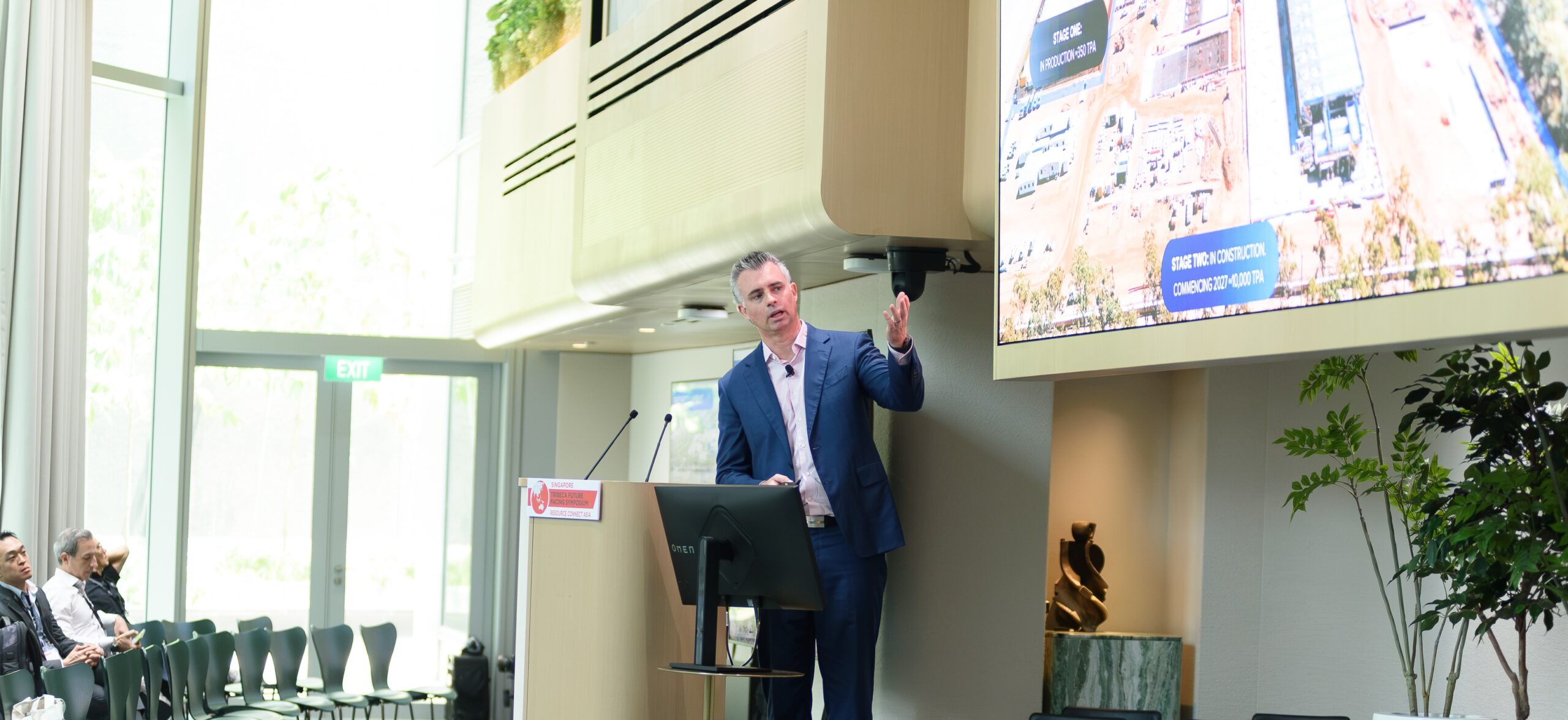
Speaking at the Tribeca Future Facing Symposium in Singapore last week, Alpha HPA Managing Director Rob Williamson highlighted growing demand for the Company’s high-purity materials across semiconductors and battery technology.
One of the strongest growth areas lies in the growing adoption of high purity alumina (HPA) in advanced semiconductor packaging applications supporting high-bandwidth memory and AI accelerators. Silica has long been used in semiconductor encapsulation because it meets demanding purity requirements. However, its low thermal conductivity limits how quickly heat can move away from increasingly powerful chips.
HPA delivers thermal conductivity up to 40 times greater than silica while maintaining the purity required for advanced semiconductor applications. As AI accelerators and next-generation GPUs continue to increase in power, interest in HPA as a packaging material is escalating.
Mr Williamson also outlined Alpha HPA's progress in chemical mechanical polishing (CMP), a critical semiconductor manufacturing process used to prepare wafers during chip production. The Company's recently commissioned Netzsch mill expands its ability to produce nano-sized alumina particles for CMP applications and supports work with leading participants in the global CMP market.
Beyond semiconductors, Alpha HPA continues to advance opportunities in lithium-ion battery applications. Following extensive qualification work, in June 2026 the Company announced a letter of intent covering 5,000 tonnes of high purity aluminium materials.
The presentation also highlighted the strength of customer commitment across Alpha HPA's product portfolio. The Company has supplied more than 900 test samples and is progressing a number of customer relationships from qualification and trial supply towards longer-term binding contracts.
Watch the full presentation recording:


